Brake Fluid Flush in St George, UT in St. George, Utah
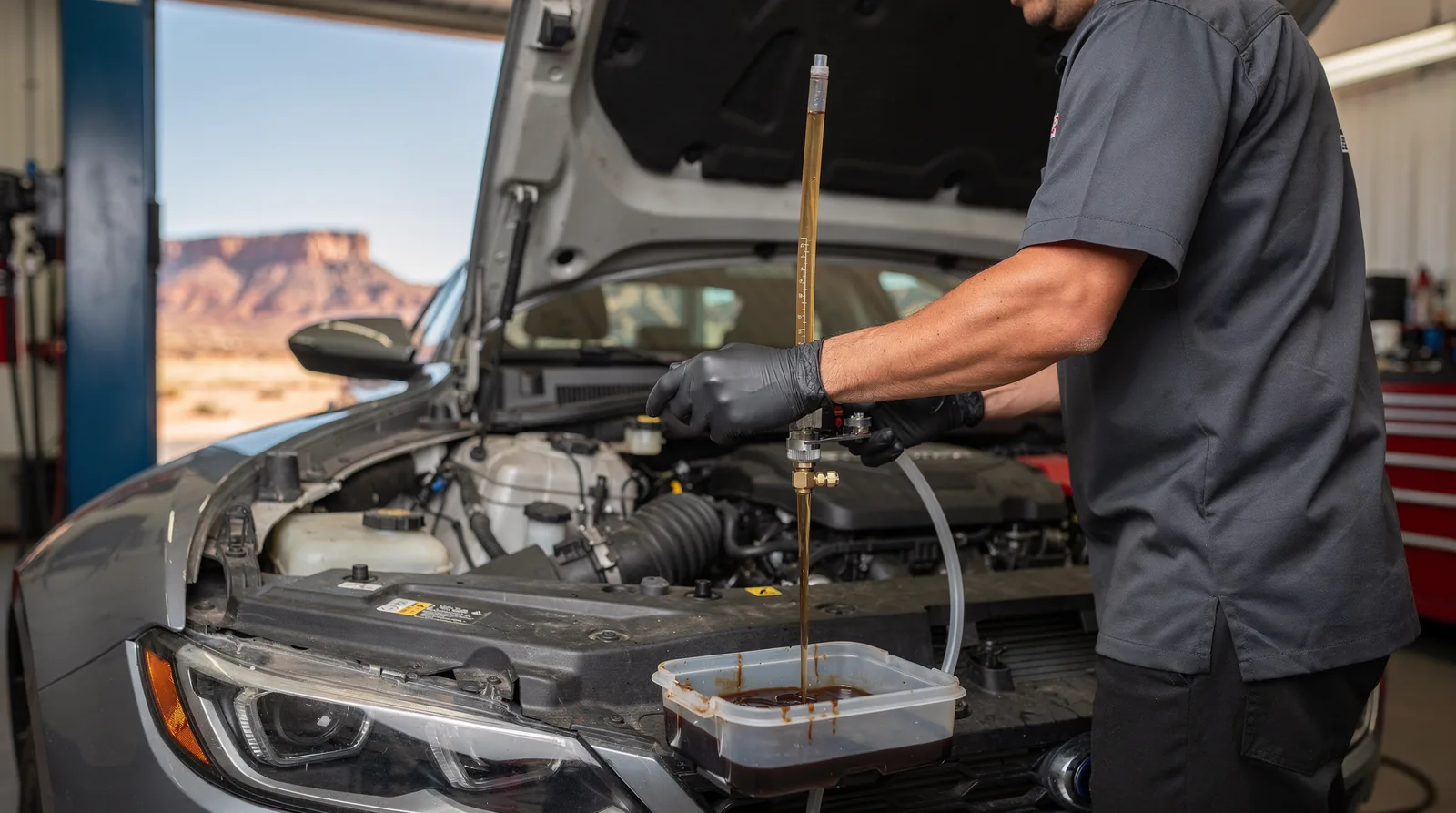
A brake fluid flush in St. George, Utah removes moisture and contaminants from the hydraulic system, restoring proper pedal feel and stopping power. St George Auto Repair performs a full brake system evaluation, including fluid quality inspection, to ensure reliable braking for Southern Utah’s steep grades and summer heat.
Key Takeaways
- Brake fluid absorbs moisture over time, lowering its boiling point and weakening stopping power.
- St. George’s steep grades and summer heat accelerate fluid degradation, requiring more aggressive service intervals.
- A soft or spongy pedal signals air or moisture in the hydraulic system, extending stopping distance.
- A full brake system evaluation measures fluid quality alongside pads, rotors, calipers, and hoses.
Why does your brake fluid need a flush?
Brake fluid absorbs moisture over time, which lowers its boiling point and weakens stopping power. St George Auto Repair treats fluid condition as a core safety check during every brake inspection. A vehicle's braking system is critical to safety and stopping power, and degraded fluid directly compromises both.
The company has served the St. George community for many years, building deep local experience with brake system care across Southern Utah's steep grades and summer heat. That experience shapes how technicians evaluate fluid quality alongside every other brake component.
What happens during a brake fluid inspection?
A full brake system evaluation measures fluid quality along with pad and shoe thickness, rotor and drum condition, caliper operation, and brake hose health. Customers receive clear findings and repair options prioritized by safety.
- Brake fluid flush removes contaminated fluid that reduces hydraulic pressure
- Hydraulic brake service restores consistent pedal feel and stopping response
- Brake bleeding eliminates trapped air that causes a soft or spongy pedal
- Brake fluid change replaces moisture-laden fluid before it damages internal components
How often should brake fluid be replaced?
A brake maintenance schedule varies by vehicle make, driving conditions, and manufacturer recommendations. St George Auto Repair technicians assess fluid condition during routine inspections and recommend service based on measured degradation, not a one-size-fits-all interval. Drivers who descend St. George's surrounding canyon roads regularly put more heat stress on brake fluid than flatland commuters. Ignoring fluid service risks longer stopping distances and premature wear on calipers and master cylinders.
The company's brake repair expertise covers the full hydraulic system, from fluid evaluation to component replacement.
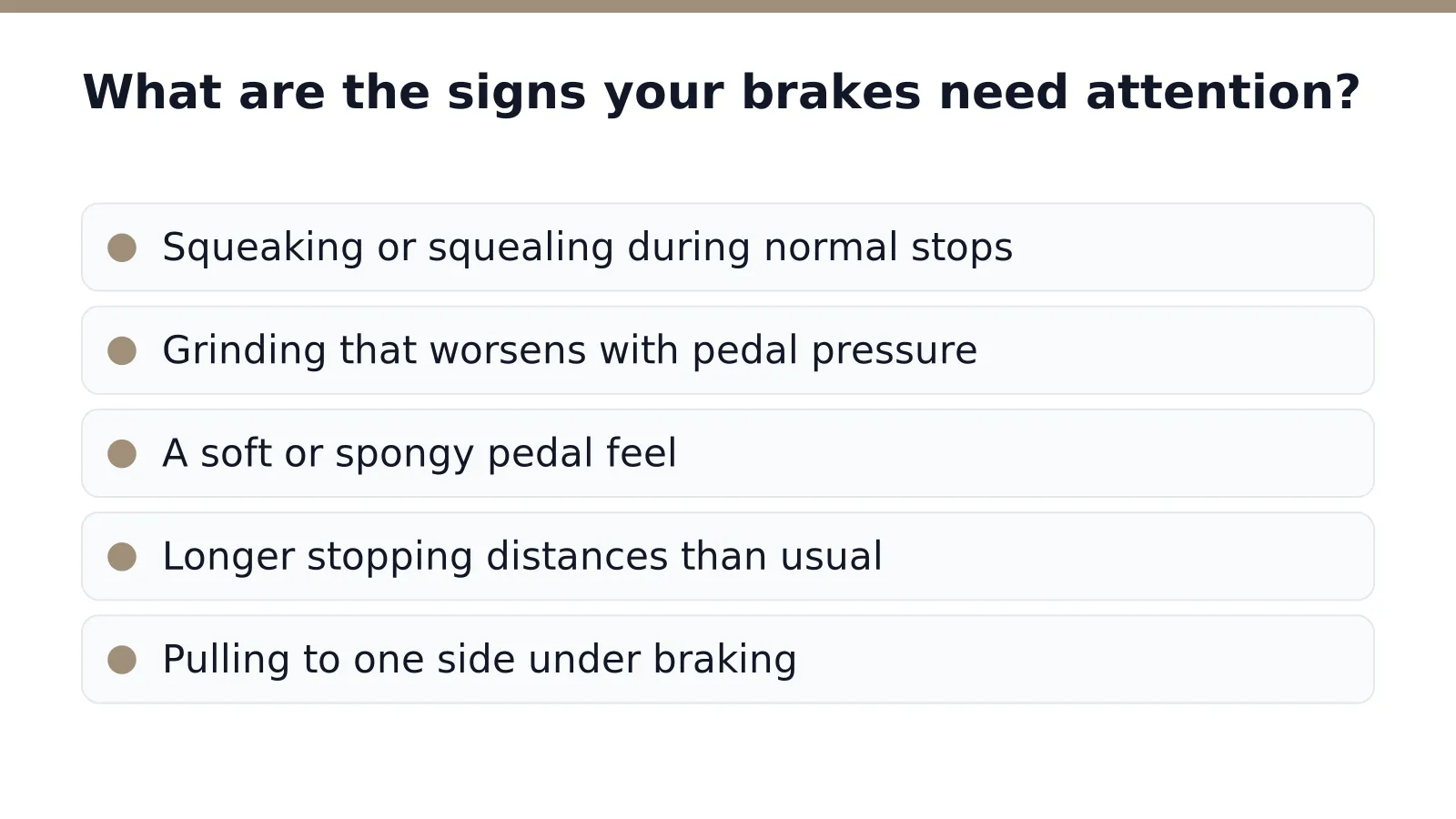
What are the signs your brakes need attention?
Squeaking, grinding, a soft pedal, or longer stopping distances signal that a professional brake inspection is overdue. St. George drivers who ignore these warnings risk losing stopping power on steep grades like those along Bluff Street or SR-18.
Technicians diagnose pads, rotors, calipers, hoses, and brake fluid to restore reliable, quiet, and consistent braking.
What does a soft brake pedal mean?
A soft or spongy pedal often points to air or moisture in the hydraulic system. Left unaddressed, the condition worsens and extends stopping distance. A brake fluid flush removes contaminated fluid and restores firm pedal response.
Why do brakes grind or squeak?
Grinding typically means brake pads have worn to the backing plate. Squeaking can indicate worn pads, glazed rotors, or debris between components. Either sound warrants immediate inspection before rotor damage multiplies repair costs.
Common warning signs include:
- Squeaking or squealing during normal stops
- Grinding that worsens with pedal pressure
- A soft or spongy pedal feel
- Longer stopping distances than usual
- Pulling to one side under braking
St George Auto Repair provides clear findings and repair options prioritized by safety. Customers receive a detailed evaluation of pad thickness, rotor condition, caliper operation, hose integrity, and fluid quality. Catching these symptoms early prevents minor wear from becoming a complete hydraulic brake service or rotor replacement.
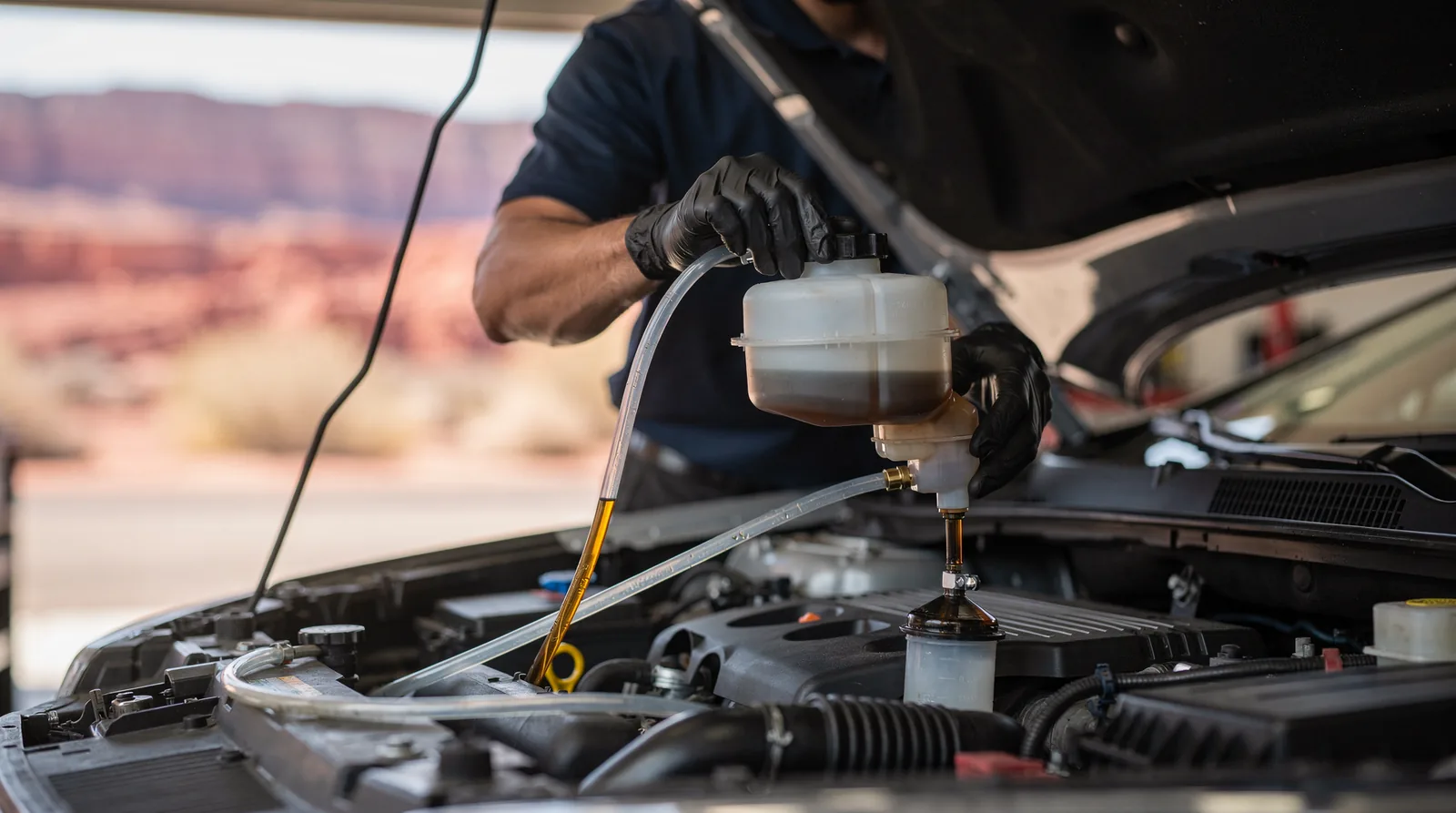
How does a brake fluid flush work?
A brake fluid flush replaces old, contaminated brake fluid with fresh fluid throughout the entire hydraulic system. This hydraulic brake service restores proper pedal feel and consistent stopping power. St George Auto Repair performs this procedure for domestic and imported cars, trucks, and SUVs across St. George, Utah.
The process begins with a full system evaluation. Technicians measure pad thickness, rotor condition, caliper operation, and brake hose health. Fluid quality receives particular scrutiny. Contaminated fluid causes a soft pedal and longer stopping distances. Those symptoms signal immediate risk for drivers navigating St. George's steep grades and summer heat.
What happens during brake bleeding?
Brake bleeding removes trapped air from the hydraulic lines. Air compresses under pressure. That compression creates a spongy, unresponsive pedal. The technician opens each bleeder valve in sequence. Fresh fluid pushes old fluid and air bubbles out. The result is a firm, consistent pedal response every time.
Why is a brake fluid change necessary?
A brake fluid change eliminates moisture that accumulates over time. Brake fluid absorbs water from the surrounding air. That moisture lowers the fluid's boiling point. Under heavy braking, the fluid can boil and create vapor. Vapor in the lines causes sudden pedal fade. St George Auto Repair provides expert diagnostics and transparent repair options. The company's technicians explain findings clearly. Customers receive repair options prioritized by safety. A proper brake maintenance schedule prevents these failures before they strand a vehicle on a Southern Utah highway.
What is the recommended brake maintenance schedule?
A recommended brake maintenance schedule combines time-based fluid service with mileage-based component inspections. Most manufacturers specify a brake fluid change every two to three years regardless of mileage. St George Auto Repair advises Southern Utah drivers to follow a more aggressive interval because St. George summer heat and steep grades accelerate fluid degradation and pad wear.
How often should brake fluid be replaced in St. George?
Brake fluid absorbs moisture from the air over time. That moisture lowers the fluid's boiling point. A spongy pedal on a long St. George descent signals fluid that has already failed. St George Auto Repair offers comprehensive repair and maintenance services for domestic and imported cars, trucks, and SUVs. Routine replacement prevents internal corrosion and maintains consistent pedal feel when braking demands peak.
What does a full brake inspection include?
A professional inspection measures pad and shoe thickness, rotor and drum condition, caliper operation, hose health, and fluid quality. Technicians prioritize findings by safety so drivers understand exactly what needs immediate attention. Catching wear early prevents the hard parts from contacting each other. That contact turns a simple pad replacement into an expensive rotor or caliper job.
The company's technicians deliver clear findings and repair options without pressure. Following a regular brake maintenance schedule catches fluid degradation and component wear before either compromises safety. Squeaking, grinding, a soft pedal, or longer stopping distances all demand a professional inspection immediately. Delaying that inspection risks losing stopping power when a St. George intersection or canyon road demands it most.
Why choose St George Auto Repair for brake service?
St George Auto Repair delivers brake service from a locally owned, independently operated facility at 776 South Bluff Street. The company has served the St. George, Utah community for many years, building a reputation through hands-on automotive care. Drivers who skip brake inspections risk longer stopping distances on Southern Utah's steep grades and summer heat.
The company's approach differs from chain shops in one critical way: personalized service. Every brake evaluation includes a detailed assessment of vehicle condition, with clear repair options prioritized by safety. Customers receive transparent findings before any work begins, backed by a satisfaction guarantee.
What does a brake inspection at St George Auto Repair include?
Technicians measure pad and shoe thickness, rotor and drum condition, caliper operation, brake hose health, and fluid quality. The evaluation produces clear findings and repair options, so customers understand exactly what the braking system needs. No vague recommendations, no unnecessary upsells.
How does St George Auto Repair handle brake fluid service?
A brake fluid flush restores hydraulic pressure and removes moisture that degrades braking performance. The company's hydraulic brake service includes brake bleeding to eliminate air pockets that cause a spongy pedal. A brake fluid change follows the vehicle's brake maintenance schedule, preventing corrosion inside calipers and lines.
| Service Element | What Customers Receive |
|---|---|
| Inspection | Detailed evaluation of pads, rotors, calipers, hoses, and fluid |
| Repair Options | Clear findings prioritized by safety |
| Assurance | Satisfaction guarantee on completed work |
| Facility | Well-equipped shop at 776 South Bluff Street |
St George Auto Repair matches national chain-level service while keeping the accountability of a family-owned operation. The company's years in St. George mean technicians understand local driving conditions, from Red Cliffs Parkway traffic to I-15 mountain passes. That local knowledge, combined with transparent communication, keeps vehicles reliable and safe.
FAQ
Why does brake fluid need a flush in St. George, UT?
Brake fluid absorbs moisture over time, lowering its boiling point and weakening stopping power. St. George’s steep grades and summer heat accelerate this degradation.
What happens during a brake fluid inspection at St George Auto Repair?
A full brake system evaluation measures fluid quality along with pads, rotors, calipers, and hoses. Technicians provide clear findings and repair options prioritized by safety.
What does a soft brake pedal mean?
A soft or spongy pedal signals air or moisture in the hydraulic system, which extends stopping distance and requires an inspection.
Conclusion
A brake fluid flush in St. George protects the entire braking system from moisture damage and pedal fade. Drivers who schedule this service at a trusted local shop receive a thorough evaluation of pads, rotors, calipers, and fluid quality. The next step is simple: book a brake inspection today and drive with confidence through every canyon descent and summer commute.